
From reactive shipping to predictive logistics
E-commerce doesn’t end at checkout; fast, reliable delivery and sustainable operations are essential for customer satisfaction. AI and automation are revolutionising logistics by optimising inventory placement, routing and last-mile delivery. Predictive logistics uses real-time signals (like traffic and weather) to reduce delays and continuously reroute parcels. The same approach helps retailers stock items closer to demand, improving delivery speed and reducing shipping costs.
Drones, robots and autonomous last-mile delivery
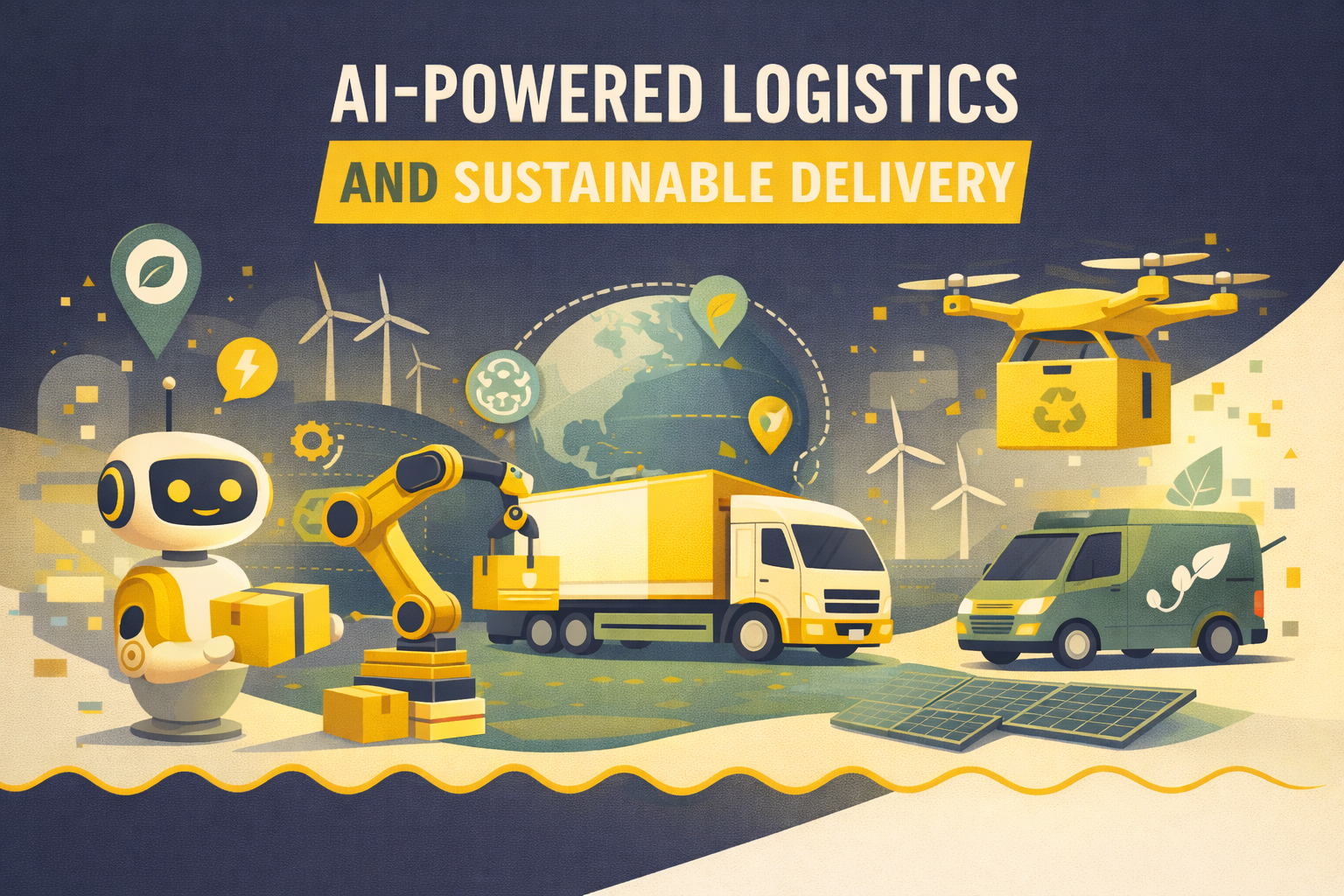
Robotics and autonomous delivery are turning last-mile delivery from a cost centre into a strategic differentiator. Drones, robots and intelligent routing are reshaping how goods move, especially for small, lightweight e-commerce parcels. Autonomous delivery systems promise faster fulfilment, lower emissions and reduced congestion in dense urban areas — while maintaining consistent service levels.
Sustainability shifts from “nice-to-have” to mandatory
Sustainability is becoming a baseline requirement. In many regions, “green delivery” options (electric fleets, cargo bikes, low-emission zones) are moving from premium add-ons to operational requirements. As regulation tightens, retailers will need eco-friendly logistics strategies to remain compliant — and customers increasingly reward brands that can prove progress.
Circular logistics and reverse-flow innovation
Logistics will also expand into circular systems. Innovations like reusable packaging, smart containers and AI-driven reverse logistics improve returns, refurbishment and resale. Predictive inventory reduces overproduction and transport miles, while micro-fulfilment centres shorten last-mile routes. Retailers partnering with local courier networks and autonomous vehicles can offer faster delivery while improving unit economics.
Carrier neutrality and resilience
To handle volatility from strikes, weather and fuel costs, retailers will increasingly rely on multi-carrier networks that can dynamically switch providers. This flexibility, paired with predictive analytics, makes supply chains more resilient. Brands that embrace AI-powered logistics can reduce costs, meet sustainability expectations and strengthen loyalty through reliable delivery.