
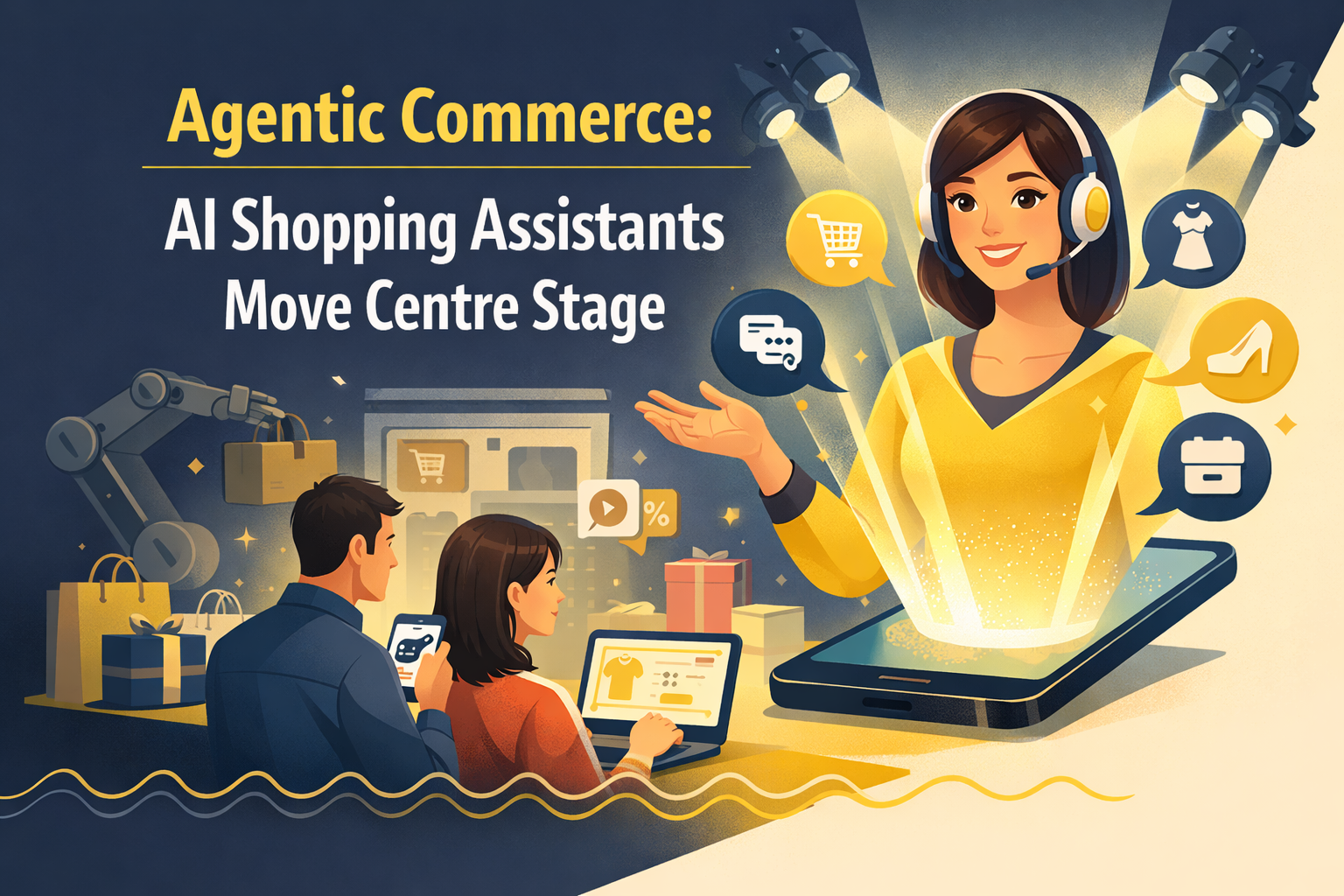
Artificial intelligence is rapidly moving from simple chatbots to “agentic” systems that act on behalf of shoppers. In 2026 consumers no longer want to search manually through endless product lists; they prefer AI tools that anticipate intent and help them make decisions. A recent survey mentioned by BigCommerce found that 86 % of consumers want AI assistance with product research . This appetite is driving the rise of AI shopping assistants and virtual agents that can discover, compare and purchase products autonomously.
From chatbots to end-to-end shopping agents
In Insider One’s 2025 overview of AI trends, the company notes that modern shopping agents have evolved far beyond traditional chatbots. These agents guide users across the entire journey, answer product questions and deliver personalised recommendations . They don’t merely respond to prompts; they proactively predict what a customer needs using behavioural cues and real‑time data. Such agentic commerce tools are embedded across websites, mobile apps and messaging channels, providing omnichannel support . DigitalSense also highlights the shift toward agentic commerce, estimating that AI shopping partners could contribute more than US$190 billion in e‑commerce revenue by 2030. Examples include Google’s AI Mode shopping assistant, which combines generative AI and virtual try‑on to help users visualise clothing on diverse body types , and Amazon’s Rufus virtual assistant built into its mobile app.
What brands must do to stay visible
Agentic systems integrate deeply with customer data platforms and recommendation engines. Insider One’s Shopping Agent predicts intent, offers dynamic product suggestions and unifies interactions across channels. By reducing search friction, these assistants increase average order value and lifetime value . They also free staff to focus on high‑value tasks because the AI handles routine questions and purchases. As Mirakl’s 2026 retail media forecast notes, more than 70 % of shoppers already use large‑language‑model agents during their shopping journeys . Retailers must therefore invest in structured product data and real‑time inventory signals to ensure their products remain visible when AI assistants make recommendations.
Key takeaway
In the coming years, AI shopping agents will become table‑stakes for e‑commerce platforms. They will seamlessly connect product catalogues to conversational interfaces, anticipate needs, execute transactions and manage post‑purchase care. Businesses that embrace agentic commerce today will gain first‑mover advantage and build more intuitive shopping experiences for tomorrow.